Research

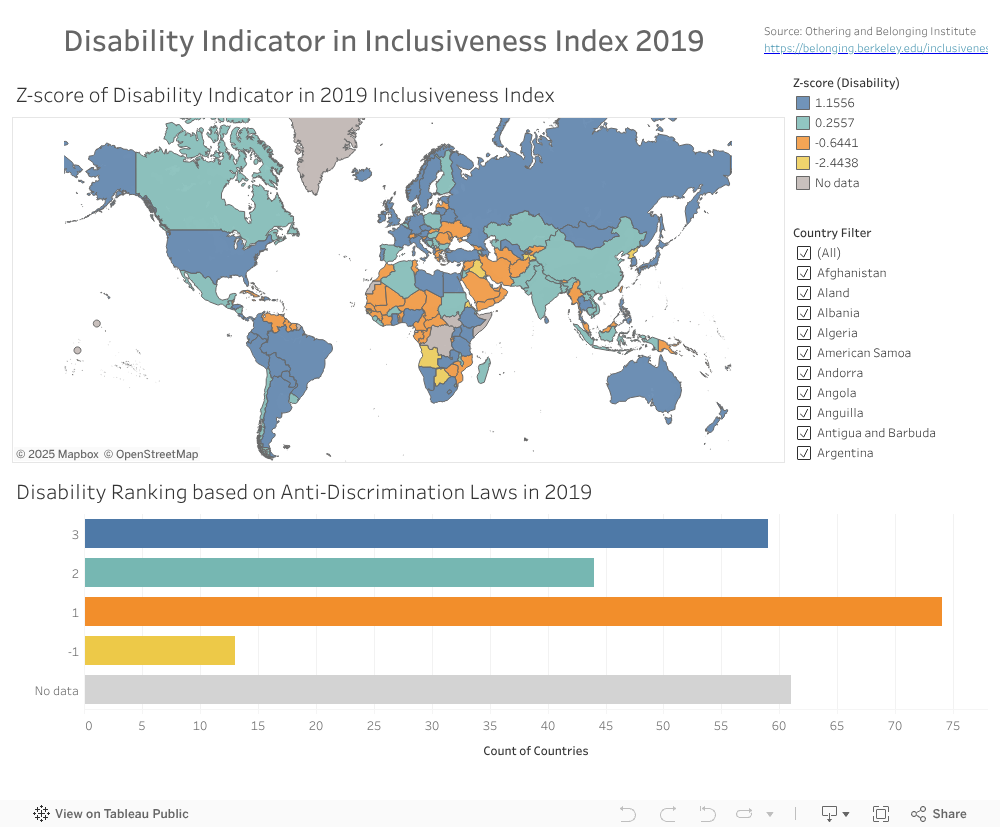
The Disability Indicator in the Inclusiveness Index in 2019 is solely comprised of one measure – a ranking based on Anti-Discrimination Laws that protect people with disabilities. These laws expressly prohibit governmental and individual discrimination based on a person’s abilities and reflect a broad consensus that enacting such protections are of moral and practical necessity. The visualizations below demonstrate each country’s Z-score which is directly reflective of its ranking based on anti-discrimination laws protecting the disability community.
Analysis

While many countries do have at least some laws protecting the rights of the disability community, there are still many countries that have little to no anti-discrimination laws protecting disabled people. Specifically, thirteen countries ranked -1, indicating that the country has no reported laws on disability and have not signed the UN Convention on Rights of Persons with Disability (CRPD). A Ranking of 1 refers to countries that have no anti-discrimination laws on disability but have signed the CRPD, which is where most countries in the world ranked. An earned ranking of 2 means the country has signed the CRPD and has two or fewer laws, while a ranking of 3 means the country has signed the CRPD and has more than two laws protecting the rights of disabled persons. While not every country in the world has enacted anti-discrimination laws protecting the rights of the disability community, almost all countries have signed the CRPD. Based on this analysis, we can say that signing the CRPD and instituting laws protecting disabled persons leads to a more inclusive society.